Kart Helmet Design: Numbers, Juniors and Budget
Practical kart helmet design: making your number and name readable, what junior drivers tend to run, and paint options that suit a karting budget.
Published 6 min read
Contents
In a kart the helmet is the most visible thing about the driver. There's no cockpit or roof to hide it, every zone is on show, and from the pit wall or the bank it's often how parents, mechanics and team-mates pick out their driver in a pack of near-identical karts. This guide covers designing a kart helmet that's easy to spot, what junior drivers tend to run, and how to get a good result without spending a fortune.
Design to be spotted
Karting fields are big and the karts look similar, especially in one-make classes. A helmet that stands out from across the circuit helps the people watching you, and photographers and commentators too. A few rules work well:
- Pick a colour nobody else has. Look at what's common in your class and avoid it. If the paddock is full of black and fluorescent helmets, a white or bright blue helmet will be easier to find.
- Make the crown distinctive. From the bank or a raised viewing area you see the top of the helmet first. A strong stripe, disc or chevron on the crown is visible from much further away than detail on the sides.
- Use big shapes. At karting speeds and distances, fine detail disappears. One bold graphic reads better than several small ones.
- Match the kart, suit or team if you can. A helmet that ties in with your bodywork stickers or race suit makes the whole package recognisable.
The helmet colours guide covers contrast and finishes in more detail.
Numbers and names
Officials score from the race numbers on the kart's number panels, and your class rules set what those must look like. Numbers on the helmet are optional in most series, but they help people watching identify you, particularly when karts bunch up and number panels are hidden.
If you add a number to your helmet:
- Make it large and bold. A heavy, squared typeface with a contrasting outline. Thin, italic or script numbers are hard to read at a distance.
- Put it on the crown or the chin. The crown is visible from above and behind; the chin bar is visible head-on and in podium photos.
- Sit it on a plain background. A roundel or panel behind the number keeps it readable over a busy graphic.
- Think about whether your number will change. Many drivers change number between seasons or championships. Painting a number on is permanent; a number decal on top of the clear coat can be swapped.
Your name usually goes on the sides or across the visor strip. A condensed font fits a longer name without shrinking it.
Junior helmets and design trends
Junior karters are a big part of the helmet design scene, and junior helmet designs tend to share some traits:
- Bright, saturated colours, often fluorescent yellow, orange, pink or green, sometimes with chrome or metallic accents.
- Name and number prominent, often on both sides and the back.
- A national flag, usually small on the back or the sides.
- Influence from professional drivers. Many young drivers take inspiration from their heroes' helmets. That's a good starting point for colours and shapes, but design something that's recognisably their own rather than a copy. A copy of a well-known helmet won't stand out and doesn't help anyone identify the driver.
Juniors also outgrow helmets. A child may need a new helmet every season or two, and helmet standards for juniors can differ from those for adults; check what your national body and class require before buying. Because of that turnover, many families keep the junior helmet design simple and save the expensive custom paint for later, or carry one design across successive helmets so the driver keeps a consistent identity.
Letting a young driver design their own helmet is a good way to get them involved. A browser-based editor is easy to use: they can pick colours, add their number and name, and spin the result in 3D. Then a parent or painter can turn it into something practical.
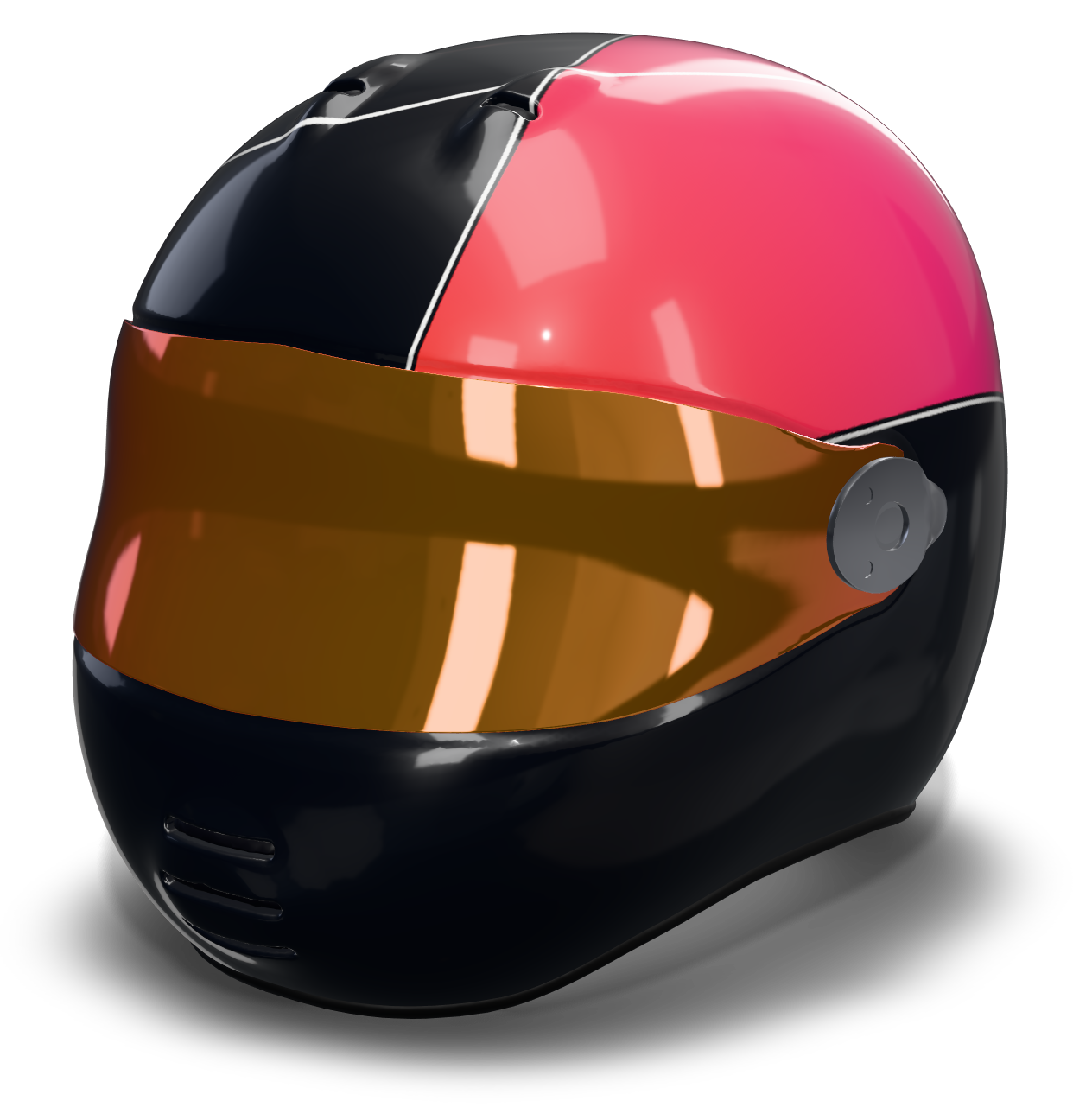
Design on the kart shellThe rounder kart full-face with its taller visor opening and chin vents.Open in the editor →Budget options
Custom paint is the expensive way to make a kart helmet yours. Prices vary widely by painter and design, and the cost is driven mostly by labour: the masking time for each colour and each crossing line. Some ways to keep costs down:
| Option | Cost | Notes |
|---|---|---|
| Plain helmet + decals | Lowest | A plain white or coloured helmet with your number, name and flag as vinyl decals. Easy to change. |
| Factory graphic you like | Low | Choose a helmet whose standard design already suits your colours, and add a name and number. |
| Vinyl wrap | Medium | Printed vinyl in your design. Removable, but harder to lay over tight curves and vents. |
| Simple custom paint | Medium | Two or three colours, a single main shape, the factory white kept as the base. |
| Complex custom paint | Highest | Fades, chrome, candy colours, airbrushed detail and lots of crossing lines all add hours. |
If you do go for paint, design for the budget. Keeping the helmet's existing white as the base colour saves a coat. Fewer colours mean fewer masking stages. A gradient or fade is usually more expensive than solid colour, and chrome or metal-flake finishes cost more again. Ask your painter for a quote based on the actual design, and send them the shared 3D link and a template so they can price it accurately.
Whatever route you choose, check your helmet manufacturer's guidance on painting and decoration, keep the certification labels visible, and use a painter who knows helmets for a helmet you race in. The guide to painting a real helmet covers this in detail, and the free printable helmet templates are handy for sketching ideas on paper first.
Planning the design
Because the whole kart helmet is on show, design every view: both sides, the crown, the chin bar and the back. Check how the main graphic flows from one zone to the next, and look at the helmet small, the way it'll be seen from the bank. The step-by-step design guide walks through the process, and the kart helmet designer page has more on the kart shell.
Starter designs on the kart shell include Apex, Sunset, Volt and Glacier.
Common questions
Do kart helmets need a race number?
In most series the scoring number goes on the kart's number panels, not the helmet. A helmet number is optional but helps people watching identify you. Check your class rules.
How can I make a kart helmet design cheaper?
Keep the factory white as the base, use two or three solid colours and one main shape, and put the number and name on as decals. Fades, chrome and lots of crossing lines add painting time and cost.
What do junior karters put on their helmets?
Bright colours, a large name and number, and often a small national flag. Many take inspiration from professional drivers, but a design of their own is easier to spot on track.
Related guides
Real paint · 7 min
How to Paint a Helmet: Planning, Masking, Safety
Plan a real helmet paint job: templates, masking, materials, keeping the shell and certification intact, when to use a pro painter, and when to wrap.
Read the guideColour · 6 min
Choosing Helmet Colours That Read at Speed
How to pick helmet colours: contrast, visibility on track and on camera, schemes that work, and when to use gloss, matte, metallic or fluo.
Read the guideInspiration · 6 min
Helmet Design Ideas: 24 Liveries to Try
24 concrete helmet livery ideas, from centre stripes and two-tones to flames, shards and splatter, with notes on colour, finish and how to build each one.
Read the guide